

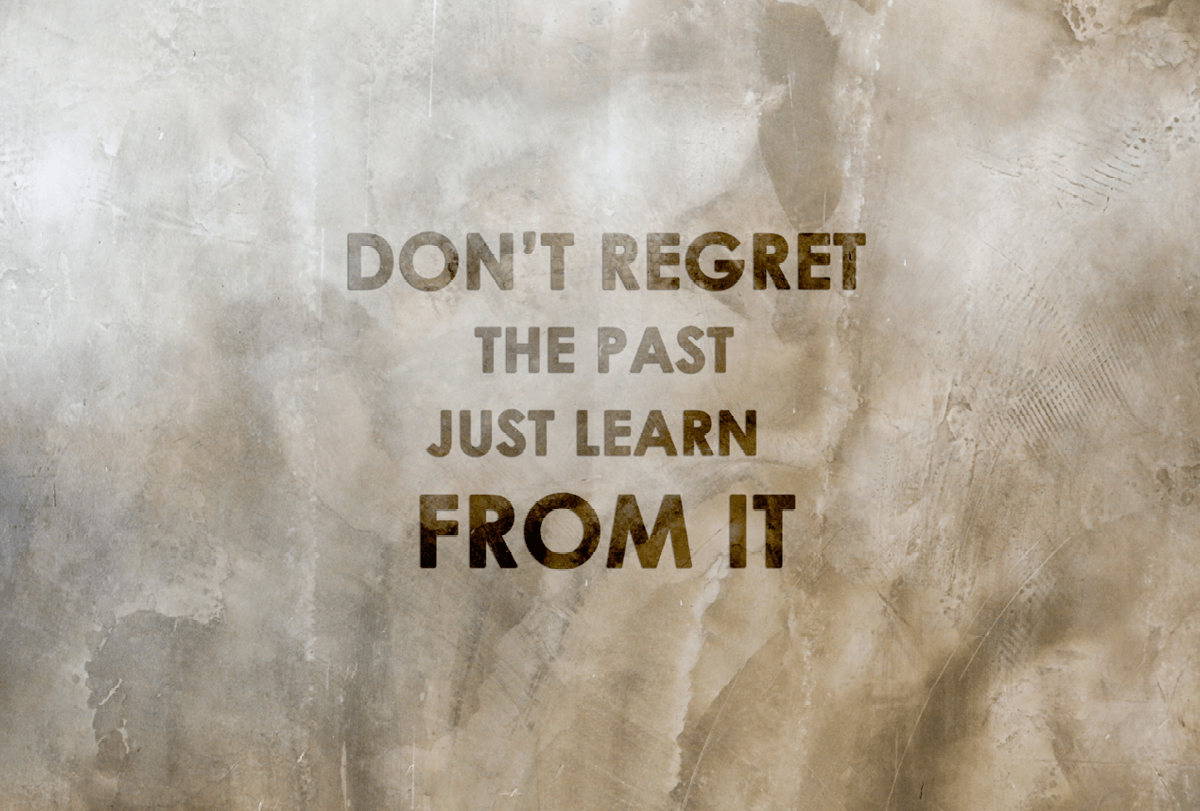
28 Jul Regret – a loaded word?
Recently, I wrote about Daniel Pink’s four categories of regret and how they apply to business. Foundation regrets. Boldness regrets. Moral regrets. Connection regrets. It prompted me to think about the difference between business mistakes and personal regrets.
For me, they are not the same thing.
I’ve made plenty of mistakes in business over the years. Most business owners have. Looking back, I can see many things I would do differently. Like the time I took on a client instead of listening to my gut (and then taking 4 years longer than I should have to extricate myself!), or when I liked a person so much I wanted them to be successful in a role that they clearly weren’t equipped for.
Yet I don’t carry many business regrets defined as regrets or failures.
That might sound strange, but I’ve come to see business mistakes as part of the learning process. They are entries in the journal of experience. Some lessons are expensive. Some are frustrating. Some arrive wrapped in disappointment. But nearly all of them teach us something useful if we’re willing to pay attention.
A business mistake often has a practical solution. You can change direction. Improve the process. Try again. Learn from it and move forward. I regularly suggest to business owners to trial an idea for a week or two to test it out. I don’t see it as failure or a mistake when it is not the best option – just part of the overall process of continual improvement.
Personal regrets feel different. We seem much tougher on ourselves with these.
They tend to involve things that cannot be revisited and rectified quite so easily. The conversation not had. The neglected relationship. The friend not called. The time not spent. The opportunity to show gratitude that quietly slipped away.
Business mistakes often affect what we do. Personal regrets affect who we are.
Perhaps that’s why Daniel Pink’s research found that connection regrets are among the most common and enduring. Deep down, most of us know that people matter more than projects, deadlines, or profit margins. Yet it is often those very things that consume our attention while relationships patiently wait in the background.
Until one day they can’t.
One thing I’ve noticed is that I’m often far kinder to myself when reflecting on a business mistake than a personal regret.
When a business decision doesn’t work out, I naturally look for the lesson. What did I know at the time? What assumptions did I make? What would I do differently now? The mistake becomes data. Experience. Part of the learning process.
Personal regrets often receive a very different treatment.
Instead of asking what we can learn, we judge ourselves. We replay the moment through the lens of everything we know today and wonder why we didn’t make a better decision. We forget that our younger selves didn’t have the benefit of hindsight, experience, or the lessons that came afterwards.
Perhaps we should extend ourselves the same grace we offer our businesses.
That doesn’t mean excusing poor decisions or avoiding accountability. It means recognising that most regrets were not born from bad intentions. They were made by imperfect human beings doing the best they could with the knowledge, circumstances, and emotional resources available at the time.
In business, we understand that mistakes are often the price of learning. In our personal lives, we sometimes treat those same lessons as evidence of failure.
Maybe regret is not asking us to keep punishing ourselves. Maybe it is simply asking us to pay attention.
The goal is not to erase regret, but to extract its wisdom. To acknowledge what happened, learn what we can, and carry the lesson forward without carrying the burden forever.
The older I get, the more I realise that success and regret are not opposite ends of the same spectrum. You can be successful and still carry regrets. Equally, you can make mistakes, learn from them, and have no regrets at all.
The difference often lies in whether the experience taught us something we could still act on.
Mistakes are often recoverable. Time isn’t.
I think this is why personal regrets linger longer. They are rarely about a wrong decision made with the information available at the time. More often they reflect a gap between our intentions and our actions. We know what matters. We simply don’t always make space for it. I often say that we don’t get to be in our 80’s sitting on the porch wishing we’d spent more time at work. Instead, we wish we had made time for the bucket list, the grandkids, watching the sunset….
Mistakes are often recoverable. Time isn’t.
That’s not a reason to dwell on the past. Regret is only useful if it helps shape the future. If a regret highlights a conversation that needs to happen, pick up the phone. If it reminds you of someone you’ve lost touch with, send the message. If it reveals a value you’ve neglected, find a way to honour it. I often run with my intuition on this – if someone pops into my mind for no apparent reason I make time to get in touch. (Spookily it is often meant to happen!).
The real lesson is to pay attention to what our regrets are trying to teach us while we still have time to do something about them. After all, the opportunities that matter most are not always found in business plans or strategic goals. Sometimes they’re sitting quietly in our personal lives, waiting for us to notice.
What can you tune into to avoid a new regret occurring? I for one am connecting more often with my brothers.